Great games are not defined solely by mechanics, visuals, or technical achievement. They are remembered because they feel right to the people playing them. That feeling is not accidental. It comes from empathy driven game UX design.
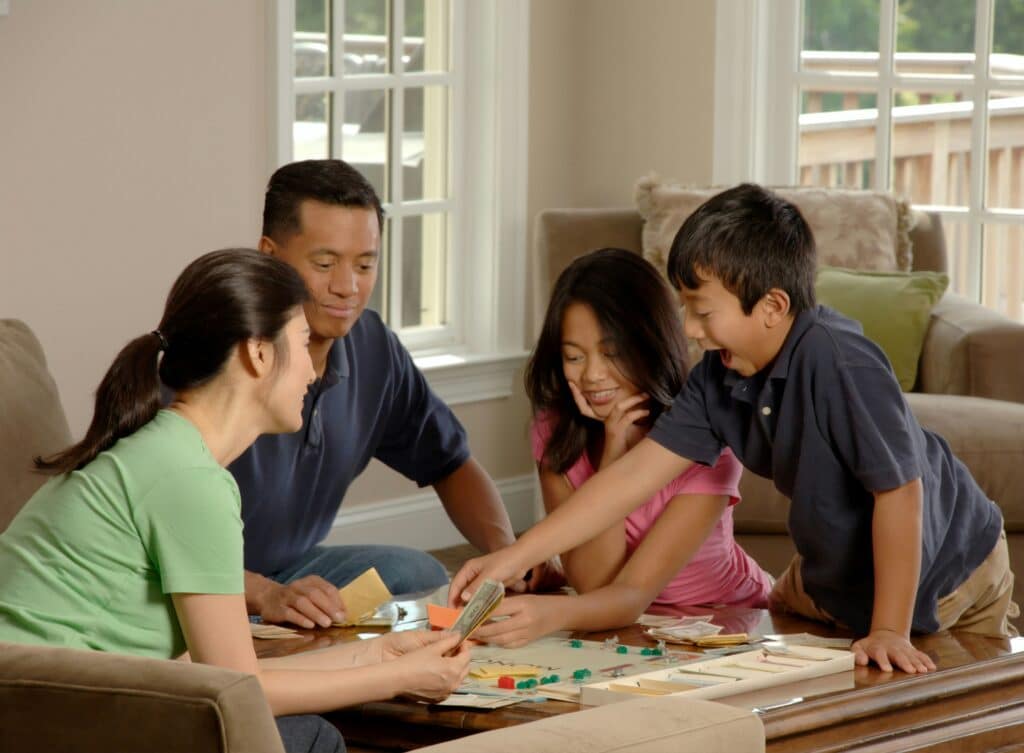
At its core, empathy in game UX is the practice of deeply understanding players’ motivations, emotions, abilities, and real world constraints, then intentionally designing systems that respect and respond to those realities. Games are uniquely intimate products. Players do not simply use them. They inhabit them. When empathy is missing, friction is felt immediately through confusion, frustration, exclusion, or disengagement. When empathy is present, it builds trust, immersion, and emotional connection that sustain long term engagement.
Empathy Starts Beyond Demographics

Player understanding often begins with demographics such as age, platform, region, or genre preference. While useful, these details rarely explain why players behave the way they do or how they feel while playing.
Empathy driven UX design looks beyond surface level data and focuses on motivation and context. Why is the player here today? What emotional state are they in when they launch the game? Are they seeking mastery, escapism, social connection, or comfort? What constraints do they have on time, attention, or skill?
Some players want deep systems and long sessions. Others need quick, satisfying moments. Some crave challenge, while others may be new, anxious, or returning after time away. Empathetic UX design acknowledges that no single experience fits all players and builds flexibility into onboarding, progression, and systems.
Clear tutorials, optional depth, forgiving early experiences, and transparent mechanics are not simplifications. They are expressions of respect for players as humans, not just inputs pressing buttons.
Designing for Emotional Moments in Play
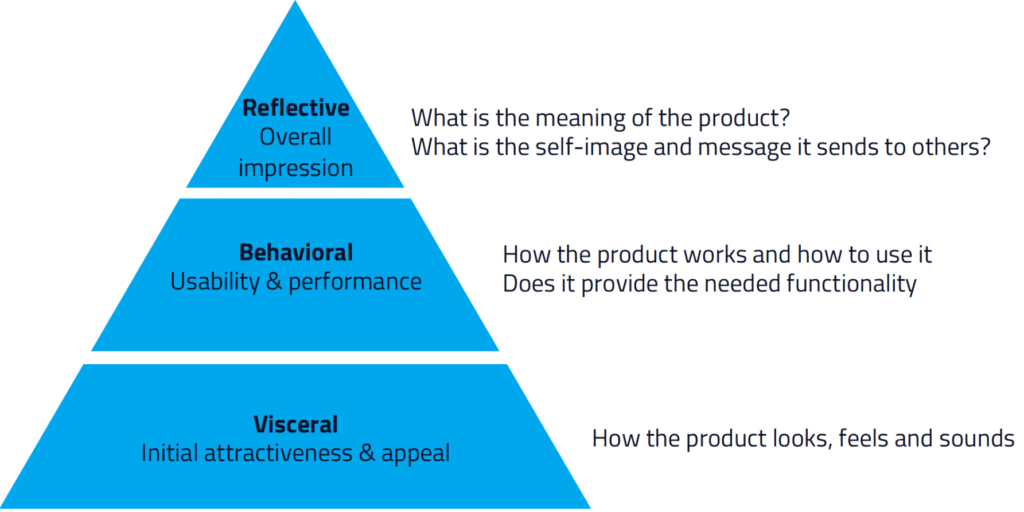
(Image by Don Norman, Three Levels of Design, 2004. From Emotional Design: Why We Love (or Hate) Everyday Things, Basic Books, 2004, p. 21.)
Players are never emotionally neutral. They may be tired after work, overwhelmed by life, excited to reconnect with friends, or simply looking for a moment of calm. Game UX that ignores emotional context often creates unnecessary friction.
Certain moments consistently shape how players feel about a game. First launch and onboarding. Early failure or loss. Returning after time away. Encountering a new or complex system. If feedback is unclear, punishment feels disproportionate, or systems are opaque, frustration compounds quickly.
Empathetic UX design anticipates these moments and responds with clarity, reassurance, and fairness. Thoughtful checkpoints, readable feedback, gentle re entry flows, and clear cause and effect allow challenge to feel motivating rather than punishing and help players stay immersed instead of emotionally exhausted.
Accessibility Is Empathy Made Visible
Accessibility is one of the clearest expressions of empathy in game UX design. When teams design for a wide range of abilities from the start, they expand who gets to participate in play.
Scalable text, readable UI, colorblind friendly palettes, subtitle customization, remappable controls, difficulty options, and reduced motion or visual intensity are not edge cases or bonus features. They support real players with real needs.
Empathetic teams treat accessibility as foundational rather than optional. When accessibility is embedded early, it improves usability for everyone and communicates a simple but powerful message. You belong here.
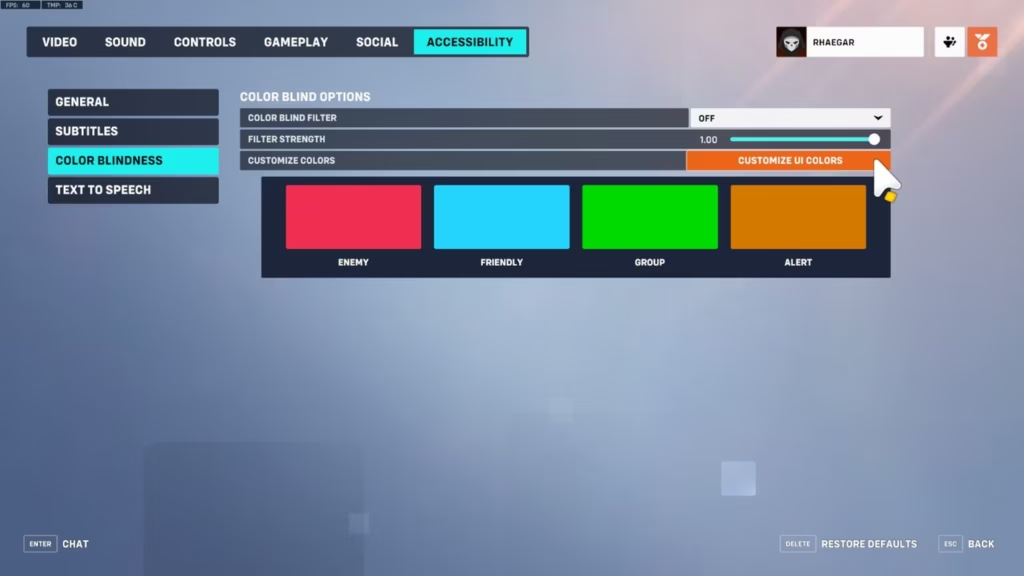
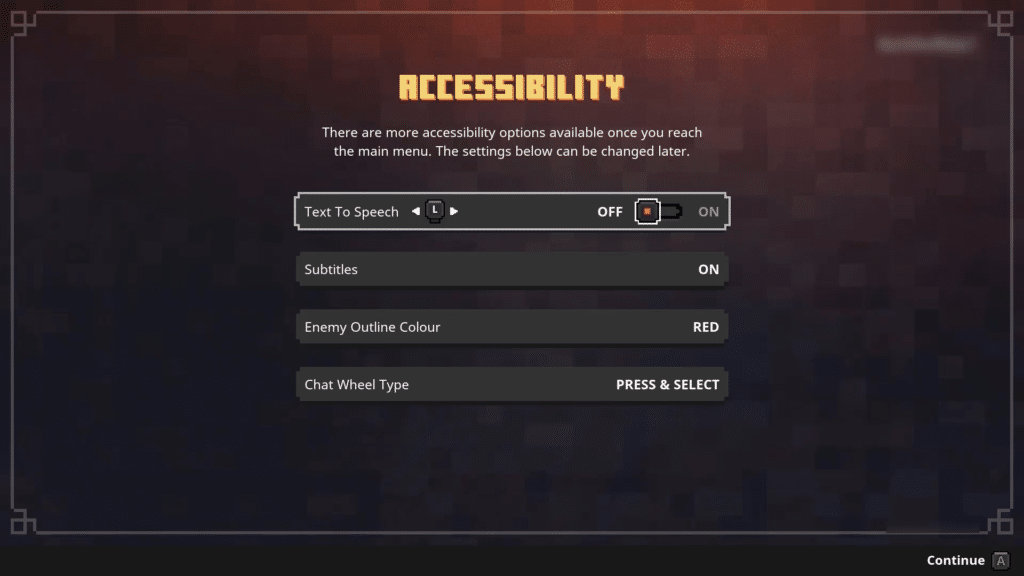
(Left: Overwatch 2, Right: Minecraft Dungeons)
If you’re building a game and want help turning this kind of empathetic, player-centered thinking into concrete decisions, you can download our free Game Dev Starter Kit. It gives you simple worksheets to map player experience, prioritize features, and avoid “fantasy roadmaps” that burn time without moving the game forward.
Trust Is Built Through Transparency
Empathy and trust are inseparable. Players trust games that respect their time, effort, and intelligence.
Transparent UX design helps players understand how progression works, why rewards are earned, what systems expect from them, and how their actions influence outcomes. When players feel misled, manipulated, or confused, especially in live service or monetized environments, trust erodes quickly.
Empathetic UX prioritizes clarity over cleverness and fairness over exploitation. Trusted games invite long term emotional, social, and financial investment. Mistrusted games lose players even when the core gameplay is strong.
Empathy Improves Systems, Not Just Interfaces
Empathy does not limit creativity. It sharpens it.
By understanding player needs deeply, designers make better decisions about complexity, information architecture, and system depth. Empathy helps teams identify which challenges are meaningful and which are unnecessary, creating systems that feel intentional rather than bloated.
It also strengthens collaboration. When UX, design, engineering, narrative, and analytics share a player centered understanding, tradeoffs become clearer and alignment improves. Playtests, usability studies, telemetry, and community feedback are not just data points. They are expressions of real human experiences that deserve to shape iteration and evolution.
Designing for Players Means Designing for Humans
Game UX design sits at the intersection of technology, art, and psychology. Empathy is what holds those disciplines together. Every prompt, system, and feedback loop communicates values to players, whether intentionally or not.
Empathy driven game UX design creates experiences that feel welcoming, fair, and meaningful. These are the games players return to, recommend, and remember.
In a medium built on interaction, choice, and challenge, empathy is not optional. It is the foundation of great game UX.
FAQ: Game UX
What is empathy-driven game UX design?
Empathy-driven game UX design focuses on understanding players’ emotions, motivations, abilities, and real-world constraints, then designing systems and interfaces that respect and respond to those human needs.
Why is empathy important in game design?
Empathy helps reduce frustration, confusion, and exclusion. When players feel understood, games build trust, immersion, and emotional connection, leading to higher retention and long-term engagement.
How does empathy affect player onboarding?
Empathetic onboarding anticipates confusion, anxiety, and skill gaps. Clear tutorials, optional depth, and forgiving early experiences help players feel safe learning rather than punished for mistakes.
Is accessibility part of game UX empathy?
Yes. Accessibility is one of the strongest expressions of empathy in game UX. Features like scalable text, remappable controls, subtitles, and visual clarity allow more players to participate fully.
Does empathy limit challenge or depth in games?
No. Empathy sharpens design decisions. It helps teams distinguish between meaningful challenge and unnecessary friction, resulting in systems that feel intentional rather than overwhelming.
How does empathy build trust with players?
Through transparency. Clear feedback, understandable progression systems, and fair reward structures help players feel respected rather than manipulated, especially in live-service or monetized games.
Who should care about empathy-driven UX design?
Game designers, producers, UX designers, engineers, and studio leaders. Any role influencing systems, feedback, or player flow benefits from a shared, player-centered perspective.
How can teams practice empathy in UX design?
By playtesting early, listening to player feedback, analyzing friction points, and treating analytics as human signals rather than just numbers. Empathy grows through iteration and observation.